
About Me: The SEO Consultant Who Thinks Like an Engineer
I Am Not a Typical SEO Consultant. Here Is Why That Matters to You.
Most SEO consultants learned their trade by studying marketing, completing a Google certification, or climbing the ranks inside a digital agency. I took a different route — one that runs through a 7.2-metre parabolic dish I designed and pointed at the moon, the commercial risk desks of Buenos Aires' largest insurance operations, thirty years inside a family brokerage that handled international carriers including AXA, Allianz, Liberty Mutual, Mapfre and Berkley, and the server rooms of major UK automotive dealer networks managing hundreds of thousands of live vehicle listings.
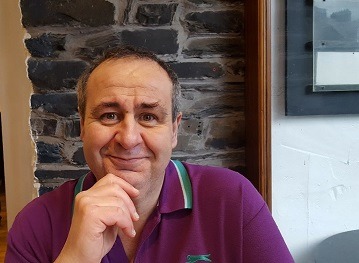
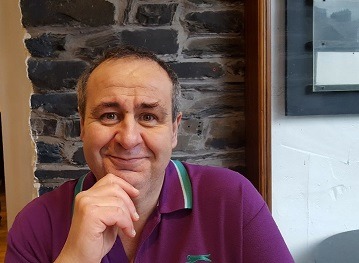
I am Jorge Jaroslavsky, founder of JJSEO, and I have been solving complex technical problems from first principles since the age of 9. What I bring to your SEO is not a standard set of agency processes applied uniformly across every client regardless of their industry, their market, or their actual problem. It is an engineering mindset built across decades, deep commercial experience inside regulated industries, and a trilingual SEO capability in English, Spanish, and Hebrew that is essentially unique among independent consultants in the UK.
If you are looking for a generalist who will apply the same playbook to your website that they applied to the last ten clients, I am not your consultant. If you need someone who genuinely understands the technical architecture beneath your website, the psychology of your specific industry's buyers, and the linguistic and cultural reality of Spanish or Hebrew markets — then we should talk.
The Engineering Foundation: Starting at Age 9
I did not come to technology as a career decision. I came to it instinctively, early, and entirely on my own terms.
I began listening the short waves at the age of 9 and operating amateur radio at the age of 16 — not casually, but as a serious technical discipline pursued at DX (long distance communications) and contest level. Ham radio at that standard demands a working understanding of antenna theory, propagation physics, signal processing, and RF engineering that most people only encounter in university. I was doing it as a child, building and modifying equipment, chasing contacts across continents on multiple bands, and learning what it means to push a system beyond its nominal specification through understanding rather than guesswork.
At 12, I disassembled a Chess Challenger computer. Not because it was broken. Because I wanted to understand what was inside it and precisely how it worked. That instinct — to go beneath the interface rather than accept what it presents — has defined how I approach every technical problem since.
I went on to study Computer Science for six years across two of Argentina's most respected institutions: ORT Buenos Aires and the Universidad de Buenos Aires (UBA). These were not short courses or conversion programmes. They were rigorous, mathematics-heavy engineering degrees that taught me to think in systems, reason from evidence, diagnose from first principles, and never accept a surface-level explanation when the root cause is reachable with sufficient depth of analysis.
That foundation is directly relevant to how I approach SEO in 2026. When crawl budget is being consumed by parameter URLs, I trace the architecture back to where the problem originates rather than treating the symptoms. When a site migration goes wrong and rankings collapse overnight, I do not speculate — I follow the technical evidence through log files, crawl data, and server response chains until I find the actual cause.
This is what 25 years of computer engineering gives you that no marketing qualification can replicate.
EME: Designing a Moonbounce Station at 1.2 GHz
If you want to understand how I approach a genuinely difficult problem, consider what it takes to build a system that bounces a radio signal off the moon.
Earth-Moon-Earth communication — known as EME or moonbounce — is the practice of transmitting a signal from Earth, reflecting it off the lunar surface, and receiving the return echo approximately 2.5 seconds later. The round trip covers roughly 800,000 kilometres. The free-space path loss at 1.2 GHz over that distance is in the region of 270 dB. The signal that returns is extraordinarily weak. The thermal noise challenges at microwave frequencies are severe. Most operators who attempt EME at 1.2 GHz use commercial antenna systems, accept the gain and noise figures those systems provide, and work within their constraints.
I did not.
I helped with the design of a 7.2-metre parabolic dish antenna specifically for EME operation on the 23cm band (1.2 GHz). The dish was not purchased — it was designed by me, with the physical construction carried out with the help of others I trusted for that work (great colleagues and most importantly, friends). The parabolic geometry, the feed horn design, and the positioning of the focal point were all based on my own calculations. The low-noise amplifier was similarly designed and built from scratch, engineered specifically to achieve the noise figure the system required for viable moonbounce at that frequency — a domain where fractions of a decibel are the difference between a contact and silence. The transceiver at the heart of the station was a Yaesu FT-736R fitted with the factory 1.2 GHz module — the only commercial element in the entire signal chain, and one that still required careful integration into the wider system I had built around it.
The contacts were made in CW — Morse code — because at the signal levels involved after 800,000 kilometres of round-trip path loss, narrowband modes are the only viable option. Every element of that station had to perform precisely as the calculations predicted. The gain had to be where the mathematics said it would be. The noise figure had to match the design. The feed had to be at focus. There was no margin for approximation, no manufacturer's helpline to call, and no existing blueprint to follow. I designed it, I built it, and I made it work.
I tell you this not to impress you with a hobby. I tell you this because the mindset that conceives, designs, and executes a moonbounce station from first principles at 1.2 GHz is the same mindset I bring to your website's search performance. I do not accept the limitations of off-the-shelf approaches. I understand systems at the level where the real problems — and the real opportunities — actually live. I find what standard tools miss because I know where to look and why.
Amateur radio has been part of my life since I was 9 years old. It is not a pastime I keep separate from my professional thinking. It is how I think.
The Silent PC: On Building Things Properly
In 2013, I designed and built a completely silent small-form-factor PC — not from a standard chassis, but from a Mini-ITX motherboard, 16GB of RAM, and a wooden enclosure I carved with CNC. The case was not left as bare timber. It was finished with laser etching — precise, clean, and to my own specification.
There was no practical reason to build the enclosure from wood. Aluminium would have been faster. A standard off-the-shelf mini-ITX case would have taken an afternoon to source and assemble. I built it from wood because the problem of passive thermal management in a non-conductive enclosure was genuinely interesting, I love modern art, and because I wanted the result to be entirely mine from concept to finish, and because I find no satisfaction in assembling someone else's components into someone else's box and calling the result something I built.
That attitude toward problems — toward what it actually means to solve something rather than apply a template — has not changed. It shows up in every SEO engagement I take on.
The Commercial Background: Three Decades in Insurance and Regulated Finance
Alongside my engineering education, I studied Insurance and Finance at university level. The combination is unusual. It has proved consistently and directly useful across everything I have done since.
My family's insurance brokerage was founded by my father in 1956. I grew up inside that business and worked within it as a broker for decades, eventually operating at the level of the Buenos Aires commercial market handling international carriers including Berkley, Liberty Mutual, Mapfre, AXA, and Allianz, alongside Argentina's leading domestic insurers. This was not a high-street operation selling standard personal lines policies. The work covered complex commercial risk assessment, policy structuring across multiple liability classes, claims management, and the kind of long-term institutional relationships that survive only on consistent competence and delivered results. There is no margin for vague claims or missed commitments when you are managing the risk exposure of serious commercial clients.
Working at that level in a regulated financial services environment for thirty years teaches you things that no marketing qualification covers and no SEO course addresses. You learn precisely how risk-averse buyers make decisions — slowly, carefully, with multiple stakeholders involved and considerable weight attached to trust signals. You learn the compliance constraints that govern what can be said, how it can be said, and what cannot even be implied. You learn that in conservative industries, trust is built over years and can be destroyed in a single interaction. You learn to read the real concern beneath the question a client is asking, because in regulated sectors the stated question and the actual concern are frequently not the same thing at all.
Every one of those lessons applies directly to SEO for regulated or conservative industries — insurance, legal, financial services, funeral care, healthcare, property. These sectors require a consultant who understands not just how to achieve rankings, but what can and cannot be claimed in content, what the actual buyer journey looks like when the decision carries real consequences, and why technically correct content frequently fails commercially when it ignores the psychology of a cautious, high-stakes buyer.
I also understand business at a level that pure SEO specialists often do not reach. Margins, risk exposure, client retention economics, long-term market positioning, the operational difference between revenue and profit — these were my working vocabulary for thirty years before I focused on SEO full-time. When I assess your organic search strategy, I am not only asking how we rank. I am asking what ranking for a given keyword actually means for your revenue, what it costs to acquire a client through that channel compared to alternatives, and what your competitive position looks like if you own that search territory in three years versus if a competitor does.
SEO Career: Twenty Years, Major Brands, and the Decision to Work Independently
My formal SEO career spans more than 20 years, working across Spanish and UK markets in both agency and independent contexts.
For a significant period I managed SEO for Autoweb Design, one of the UK's specialist automotive digital agencies. This was not generalist agency work applied loosely to automotive clients. Autoweb's entire focus was the automotive sector, and the work required genuine technical depth — large inventory sites with complex URL structures, fleet versus retail search intent segmentation that most generalist consultants do not understand, manufacturer compliance constraints on content, and the constant operational pressure of platform migrations for dealer groups with thousands of active vehicle listings whose rankings cannot afford to collapse during a transition.
In that role I worked directly on the organic search performance of major dealer groups, including the largest Volvo and Audi dealer group in the South of England, and national networks including Perrys Motor Group, Breeze Volkswagen, Ocean Automotive, and SERE Motors. The results were real and measurable. A 30% year-on-year organic traffic increase for a major national dealer network across a full platform migration is not a figure I would cite if I could not account for every element that produced it.
Beyond automotive, I delivered SEO localisation work for Deliveroo in the Spanish market, specifically for Valencia, Madrid, Barcelona, and Zaragoza — a project that required not just technical SEO execution but a genuine understanding of Spanish search behaviour, cultural adaptation of content strategy across a fast-moving consumer brand, and the complexity of localising at scale for a language and market that most UK-based consultants have never worked inside at first hand.
I left agency work without regret. I work better, and deliver better results, when I am working directly with the client whose problem I am solving, without account management layers between the diagnosis and the solution.
Trilingual SEO: English, Spanish and Hebrew — and Why This Matters
This is where the JJSEO capability becomes genuinely rare in the UK market, and where it goes beyond what any individual consultant working alone could offer.
I am a native Spanish speaker, fully operational in English, with a working knowledge of Hebrew. I handle the SEO strategy, technical architecture, hreflang implementation, and search intent analysis across all three languages. The English-to-Hebrew localisation work, however, is delivered in direct partnership with my wife — and her professional standing in this field is worth stating in full, because it is exceptional.
Dovrat Levy is a native Israeli professional translator, a listed member of the Israel Translators Association (ITA) — Israel's official professional body for translators — and a former PPC ads specialist for Google. Her working language pairs are English and Spanish into Hebrew. Over her career she has translated in excess of 4 million words at professional level, working across corporate, e-commerce, technology, UI/UX, legal, marketing, SEO, and Paid Social content.
Her client list includes Samsung, Microsoft, PayPal, Amazon, HP, Spotify, Facebook, Google, Epson, Caterpillar, Kimberly-Clark, Discount Bank, Emirates, Pampers, boohoo, Dove, IWG plc, Wyndham Hotels, American Airlines, and EasyJet — among others. She has worked at senior reviewer and quality controller level for localisation projects delivered through WeLocalize and SDL, vetting and revising the output of other translators to the standards those platforms and their clients require. Her professional CAT tool stack includes Trados Studio, MemoQ, Memsource, Smartling, SDL, Polyglot, XTM, Translation Workspace, Wordfast, Subtitle Edit, CaptionHub, and WordBee.
This is not a freelancer checking a Hebrew translation with a dictionary and a degree of confidence. This is enterprise-grade Hebrew localisation delivered by an ITA-accredited professional whose work has been trusted by some of the largest technology and consumer brands in the world, using the same tools and workflows those organisations use internally.
For Israeli companies entering the UK or European market, or for UK businesses targeting Israeli or broader Hebrew-speaking audiences, the combination JJSEO offers is genuinely difficult to find anywhere: SEO strategy, technical architecture, and search intent analysis from a consultant with 20 years of experience, delivered alongside native-level Hebrew localisation from an ITA-accredited professional with a verifiable track record at the highest commercial level.
The Spanish side I handle directly. I have lived and worked in Argentina and Spain. I understand what Spanish-speaking audiences search for, how they express intent, and where cultural differences in search behaviour diverge from the English-language assumptions most UK consultants apply. I know this not because I studied the market, but because I am from it.
The Specialist Areas I Work In
After 20 years in this field, I am selective about the work I take on. I work with a small number of clients at any one time on problems where my specific background provides a genuine advantage that a generalist consultant cannot replicate. Those areas are:
Automotive SEO — dealer groups, franchise networks, fleet versus retail intent segmentation, EV and ULEZ-driven shifts in search behaviour, manufacturer content compliance, and technical issues. I have direct experience at the highest level of this niche in the UK market, with measurable outcomes at major national dealer group level.
SEO for Funeral Directors — a conservative, trust-dependent sector where search intent is emotionally complex, national consolidation is intensifying competitive pressure, and generic SEO advice consistently fails because it does not understand the buyer. I understand this industry's specific dynamics, its regulatory environment, and the sensitivity required in content strategy.
SEO Localisation (English → Spanish / English → Hebrew) — full localisation strategy, not translation. Cultural search intent analysis, hreflang architecture, market-specific keyword research, and content that actually ranks and converts in the target market rather than simply existing in the target language. Delivered at professional standard in both language directions.
Insurance and Financial Services SEO — regulated industries where compliance awareness is as important as technical execution. I have worked inside this sector for decades at commercial level and understand its constraints from direct operational experience, not from research.
SME SEO across Leeds, West Yorkshire and nationally — for businesses that want direct access to a senior consultant with genuine expertise, not a junior account manager executing a template, and who understand the difference in outcomes that distinction produces.
Based in Leeds. Working Nationally and Internationally.
I have lived in Leeds for 15 years. It is where I work, where I know the local business environment well, and where I have built meaningful organic search visibility for clients and target keywords in a short period since launching JJSEO independently.
Leeds is my base. It is not my limit. I work with clients across the UK and internationally — particularly on multilingual and localisation projects where physical proximity matters far less than linguistic competence, cultural understanding, and technical depth.
How I Work
I do not carry a large client roster. I do not operate with junior staff executing strategies I designed in a briefing and then handed over. I do not outsource the work to cheaper contractors while billing at senior consultant rates.
When you work with JJSEO, you work with me directly. Every audit, every strategy, every technical recommendation, every piece of analysis comes from a person with 20 years of SEO experience, 25 years of computer engineering background, 30 years of commercial experience in regulated industries, and a trilingual capability backed by one of the most credentialed Hebrew localisation professionals working in the UK.
I charge accordingly. I am not the cheapest option in Leeds or in the UK market, and I am not attempting to be.
If you have a complex problem, a technically demanding site, a niche industry that generalist consultants consistently fail to understand, or a market that requires genuine linguistic and cultural competence rather than surface-level localisation — I would be glad to hear from you.
Innovative SEO Solutions
I offer tailored SEO solutions that leverage market research and customer psychology, helping clients achieve measurable results and long-term growth in an ever-evolving search engine landscape.
Leeds SEO
Based in Leeds, I provide tailored SEO solutions that drive measurable results and long-term growth for businesses and agencies across various industries.
Location
8 Queenshill Garth, LS17 6BW, Leeds, West Yorkshire, United Kingdom
Hours
9 AM - 5 PM
Contact Your Local SEO Consultant Today
Get in touch for tailored SEO solutions and measurable results.


Expertise
Driving organic traffic and qualified leads with tailored SEO solutions.
Growth
Results
Mail to: jj@jjseo.co.uk
© 2025 JJSEO. All rights reserved. | Expert SEO Consultant in Leeds
Free SEO Toolsour text here...