
Location Page SEO for Campervan Dealers: How to Drive Local Buyers in 2026
A complete guide to location page SEO for UK campervan and motorhome dealers. Learn how to build high‑converting regional pages, improve Google Business Profile visibility, attract local buyers, and increase real forecourt traffic in 2026.
SMESAUTOMOTIVE SEOLOCAL SEO
Jorge Jaroslavsky
1/26/202611 min read
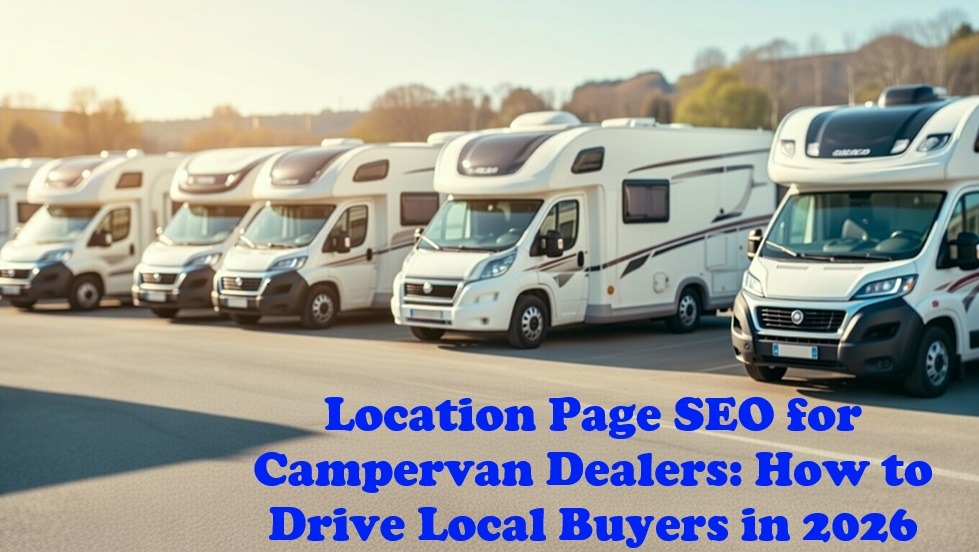
Location Pages That Actually Drive Forecourt Traffic: A Deep Dive for UK Campervan Dealers
I've been working with vehicle dealers for almost a decade now, and if there's one thing I've learned about the campervan and motorhome market, it's this: national visibility might stroke your ego, but local dominance is what fills your forecourt.
When someone types "campervan dealers near me" or "motorhome dealers in Cornwall" into Google, they're not just browsing—they're often days or even hours away from visiting a showroom, booking a test drive, or putting down a deposit. These high-intent local searches drive genuine foot traffic and qualified enquiries far more effectively than broad, competitive terms like "best campervan UK".
In my main pillar article on SEO for campervan dealers, I covered the fundamentals: Google Business Profile setup, citation building, and review generation. This piece goes much deeper into what I consider one of the most powerful—yet criminally underused—tactics in local SEO: creating dedicated location-specific pages on your dealership website.
These aren't just token "we serve Yorkshire" pages thrown together in an afternoon. I'm talking about properly researched, genuinely useful content that targets county, region, or city-level queries whilst blending SEO best practice with the kind of lifestyle content that actually resonates with adventure-seeking buyers across areas like Yorkshire, Cornwall, the Lake District, and beyond.
I'll walk you through why these pages work so well, how to research the right keywords using both free and AI-powered tools available in 2026, the exact structure and content ideas that get results (including local touring routes, campsites, and UK licence considerations), GBP optimisations specifically for vehicle dealers, real-world examples from high-ranking UK sites, and how to leverage AI models like ChatGPT and Gemini to speed up creation—whilst avoiding the thin, generic AI content that Google ignores or actively demotes.
Why location-specific pages are an absolute game-changer
Here's the thing about local search: Google's Local Pack results (that map with three businesses at the top of search results) and organic rankings for geo-modified queries strongly favour sites with hyper-relevant, detailed content tied to a specific area.
Your generic homepage, no matter how well optimised, will struggle to rank for "campervan dealers in Yorkshire". But a focused, content-rich page at something like /campervan-dealers-yorkshire or /motorhomes-cornwall? That's far more likely to surface for those exact local searches—and more importantly, it's exactly what searchers want to find.
From my experience working with dealers, the benefits break down like this:
Higher relevance – Google can clearly see the page directly answers the query for that specific region. No ambiguity, no competing signals.
Better user experience – Buyers landing on your Yorkshire page get localised information about the Yorkshire Dales, routes near Bolton Abbey or Grassington, and campsites around those areas. It speaks directly to their plans, not some generic "explore the UK" waffle.
Internal linking power – You can strategically link from blog posts, vehicle listings, and even your Google Business Profile to these pages, concentrating topical authority where it matters most.
Long-tail traffic goldmine – Instead of fighting over "motorhomes", you're tapping into lower-competition, higher-conversion terms like "used motorhomes Yorkshire families" or "campervan dealer near Leeds". Far easier to rank, far better quality traffic.
AI-era advantage – With Google's helpful content systems and AI Overviews now prominent in 2026, pages rich in unique local expertise, original photos, and genuine dealer knowledge stand out dramatically over generic AI-spun fluff.
I'll be straight with you: in 2026, AI-generated content floods the web. Success comes from what I call the human-AI hybrid approach—use AI tools for research and first drafts, then infuse your genuine dealer knowledge, your own photos, video walkthroughs, and real customer stories. That's what builds trust and rankings that last.
Step 1: Local keyword research (my 2026 toolkit)
Right, let's get practical. You need to start with intent-focused research, targeting modifiers like "in [county]", "near [city]", specific areas like "Yorkshire" or "Cornwall", plus lifestyle qualifiers such as "for families", "small campervans", "used", and brand names like "VW California Yorkshire" or "Rapido Cornwall".
Free tools (still incredibly strong in 2026)
Google Keyword Planner – Set up a free Google Ads account if you haven't already. Plug in seed terms like "campervan dealer Yorkshire" and filter by location (UK > Yorkshire and the Humber) to see rough volume bands and related terms. It's not perfect, but it's free and directly from Google.
Google Trends – Brilliant for comparing interest over time. Try "campervan Yorkshire" versus "motorhome Cornwall" to spot seasonal spikes—you'll often see coastal areas peak around school holidays and summer months.
Google Search autocomplete & "People Also Ask" – Start typing "campervan dealers in…" and watch what Google suggests. Switch to incognito mode and try different locations to reduce personalisation. The PAA boxes are goldmines for FAQ content.
Google Search Console – If your site's already live, dive into the Search Results report. You'll uncover geo-queries where you're already getting impressions ("motorhome dealers Cornwall", "VW campervan Yorkshire") but perhaps not clicks—perfect opportunities to expand and optimise.
Semrush Free / Ahrefs Webmaster Tools – Limited functionality on free plans, but useful for gauging keyword difficulty, rough volumes, and question variants around your main regional terms.
AnswerThePublic – Still handy in its free limited form for visualising questions like "best campervan sites in Yorkshire" and related search modifiers.
Paid tools (worth every penny if you're serious)
Semrush or Ahrefs – These remain the leading SEO suites in 2026. Use Keyword Magic Tool (Semrush) or Keywords Explorer (Ahrefs) with UK filters to see exactly what phrases your top-ranking regional competitors are getting traffic from. Competitor gap analysis here is particularly revealing.
Google Business Profile Insights – Check the actual search queries people use to find your profile (e.g., "campervan dealer near Leeds", "motorhome dealer St Austell") and feed those directly into your content planning.
AI-powered keyword expansion
Here's where tools like Gemini or ChatGPT become genuinely useful. Try a prompt like:
"Generate 50 long-tail keyword ideas for a campervan dealer in Yorkshire, including variations with 'used', 'new', 'family', 'small', 'near Leeds', seasonal terms, and references to the Yorkshire Dales and Peak District. Include likely search intent for each."
You'll get a solid starting list in seconds. The key is to then validate these against real data in Keyword Planner or Search Console—AI can suggest plausible terms that nobody actually searches for.
I typically aim for 20–30 mapped keywords per location page: one primary phrase, a handful of strong secondary phrases, plus supporting long-tail questions and modifiers.
Real-world positioning examples
Look at how successful regional dealers position themselves:
Aire Valley Campers markets itself as "one of Yorkshire's leading campervan and motorhome specialists", trading from Keighley in West Yorkshire. That's exactly the sort of clear regional positioning your pages should echo.
Maple Leisure in East Yorkshire positions as "a family owned campervan & motorhome dealership in East Yorkshire"—simple, clear, and naturally aligned with regional searches.
In Cornwall, retailers like Cornwall Motorhome Centre (St Austell) and Eden Motorhomes (Redruth) heavily emphasise their Cornish location and specialism.
You don't need to copy them, but notice the pattern: crystal-clear about where they are and who they serve.
Step 2: Structuring pages that actually rank (and convert)
Right, let's build these properly. I recommend a consistent URL structure like /campervan-dealers-[region] or /motorhomes-[county]. Keep URLs short, readable, and genuinely human-friendly.
Ideal structure (aiming for 1,600–2,000+ words)
H1: "Campervan & Motorhome Dealers in Yorkshire – Your Local Adventure Specialists"
Your H1 should include the region and your primary offering. Clear, descriptive, benefit-focused.
Introduction (200–300 words)
Hook with genuine local appeal: "Explore the Yorkshire Dales or North York Moors in your own campervan…" Mention your stock range, how long you've been trading, and your unique selling points—NCC approval, finance options, part-exchange, family-run service, whatever genuinely sets you apart.
H2: Why Choose a Local [Region] Campervan Dealer?
Talk about the practical benefits: shorter travel time for viewings, ability to physically inspect and test drive vehicles, ongoing local support and servicing, and your genuine knowledge of local routes, sites, and road conditions. This builds trust and relevance simultaneously.
H2: Our Campervan & Motorhome Stock in [Region]
Describe your typical stock—new versus used, brands you specialise in (VW, Wildax, Rapido, Adria, whatever), and vehicle types (panel van conversions, coachbuilts, A-class, compact campervans for couples, family motorhomes). Where possible, use appropriate schema markup to help search engines understand your vehicle listings.
H2: Top Touring Routes & Campsites Near [Region]
This is where you add genuine lifestyle value that AI-only content simply cannot replicate:
For Yorkshire: Highlight the Yorkshire Dales National Park with specific routes—perhaps the loop through Bolton Abbey, Grassington, Aysgarth Falls, and Hawes. Mention the North York Moors, Whitby, and the coast. Reference popular campsites and CLs (Certificated Locations) around those areas.
For Cornwall: Reference coastal touring along the South West Coast Path, routes around Newquay, Perranporth, St Austell, or Looe. For example, Monkey Tree Holiday Park near Newquay offers RV-sized pitches specifically designed for larger American-style motorhomes—exactly the sort of practical detail your customers appreciate.
Embed a Google Map showing the region and key points of interest. Give real driving and parking tips—narrow lanes, height restrictions, seasonal traffic hotspots. This is gold dust for SEO and user experience.
H2: UK Driving Licence & Weight Considerations
This is crucial information that's often poorly explained online. Focus on motorhome weight categories rather than getting bogged down in complex towing law:
A standard Category B car licence (passed after 1997) typically covers motorhomes up to 3,500 kg maximum authorised mass (MAM).
Heavier motorhomes between 3,500 kg and 7,500 kg usually require Category C1.
Very heavy RV-style vehicles over 7,500 kg require Category C.
Always link to current DVLA guidance and explain how your team helps buyers check their licence entitlements and vehicle weights before purchase. Don't try to give definitive legal advice yourself—just helpful, practical guidance that protects both you and the customer.
H2: Customer Stories & Local Adventures
This section transforms a good page into a great one. Add genuine user-generated content—photos and testimonials from local buyers. Something like: "John from Leeds: 'We've had our Adria for six months now—perfect for weekend trips to the Moors with the kids and the dog. The team at [Your Dealership] were brilliant from start to finish.'"
Ideally include photos of handovers, the van in local settings, or customers at local campsites. Real faces, real stories, real trust.
H2: Visit Us or Get in Touch
Full address, embedded Google Map, opening hours, parking information (especially important for trade-in visits), and strong calls-to-action to book viewings, test drives, or valuations.
FAQ Section (with schema markup)
Cover genuine questions: "Do you deliver campervans across Yorkshire?", "Can I part-exchange my car for a motorhome?", "Do you offer finance on used motorhomes in Cornwall?", "What's your workshop turnaround time?"
Use FAQPage schema markup, but don't rely on rich snippets appearing—Google's become more selective. The content value is what matters.
Technical SEO essentials
Mobile-first design – Fast loading, compressed images, lazy-loaded galleries.
Local schema markup – LocalBusiness schema tied to the correct branch, potentially with AutoDealer or similar types layered in.
Strategic internal linking – Link to stock listings, related blog posts, your main "Why buy from us?" page.
External authority links – DVLA, National Parks websites, Camping and Caravanning Club, Caravan and Motorhome Club—builds topical authority and trust.
Optimised images – Descriptive alt text like "used VW California campervan ready for Yorkshire Dales touring" rather than keyword-stuffed nonsense.
Step 3: Google Business Profile optimisations for dealers
Your GBP listing is often the very first touchpoint for local buyers. Getting categories, content, and links right pays dividends quickly.
Categories (absolutely critical)
Choose the most accurate primary category: "RV dealer", "Motor vehicle dealer", or "Motorhome dealer" (if available in your region). Add relevant secondary categories like "Caravan dealer" if appropriate, but avoid service-only categories as your primary unless you genuinely don't sell vehicles.
Content and features
Photos and video: Upload at least 20–30 high-quality photos—forecourt, showroom interior, range of vehicle types, your team, customer handovers. Short video walkthroughs increasingly appear in profiles and build trust brilliantly.
Posts: Weekly updates with new stock arrivals, used vehicle highlights, show attendance (Yorkshire County Showground, NEC Motorhome Show), seasonal maintenance tips, local events you're involved with.
Services & attributes: List everything—finance, part-exchange, workshop/servicing, accessory sales, whether you're pet-friendly, wheelchair accessible, have customer parking.
Q&A and reviews: Seed helpful questions ("Do you buy motorhomes for cash?", "Can I book evening viewings?") and respond quickly to both questions and reviews. Reference your region naturally in responses.
Multi-location strategy: If you have multiple branches, create one GBP profile per physical location and link each to its dedicated location page—not your homepage. This strengthens Google's understanding of each branch's regional relevance.
Always set your GBP website button to point at the most relevant location page, not just your homepage.
Real-world examples worth studying
Here are some UK dealers doing regional positioning well (study their approach, don't copy verbatim):
Aire Valley Campers – Family-run specialist in Keighley, West Yorkshire, clearly positioning as Yorkshire's go-to dealer with emphasis on stock variety and personal service.
Maple Leisure – East Yorkshire dealership, official dealers for WildAx, Malibu, and Rapido, with strong regional identity and aftersales messaging.
Marquis Leisure South Yorkshire – Branch-specific pages focused on their Dinnington location, part of a larger network but maintaining local relevance.
Cornwall Motorhome Centre – St Austell-based, heavily leaning into Cornish identity for both new and used stock.
Eden Motorhomes – Redruth, Cornwall, trading on long-standing local presence and family values.
What they share: clear regional signalling, strong stock presentation, and emphasis on service and reputation over just specifications.
Using AI effectively (without shooting yourself in the foot)
AI models in 2026 are powerful accelerators, but they absolutely require human oversight—especially for local details and anything remotely legal or technical.
My practical hybrid workflow
Research with AI: Use Perplexity, Gemini, or ChatGPT to gather route ideas, campsite types, FAQ angles, content structures. Then cross-check anything factual against authoritative sources—DVLA for licence rules, official National Park sites, trusted camping organisations.
Outline and draft: Ask ChatGPT to draft sections—perhaps a 400-word Yorkshire introduction focused on Dales and Moors adventures, or an FAQ set for Cornwall buyers. Then heavily edit for your tone, accuracy, and genuine expertise.
Add irreplaceable human expertise: Layer in your personal recommendations, specific stock examples, your own photos and videos, real customer stories. This is where E-E-A-T (Experience, Expertise, Authoritativeness, Trustworthiness) actually comes from.
Optimise with AI-assisted tools: Products like Surfer SEO or Clearscope can check topical coverage and on-page optimisation, but never let them override common sense or local accuracy.
Fact-check everything: AI regularly misstates licence thresholds, invents campsite names, or gets distances wrong. Always verify critical details against primary sources before publishing.
The golden rule: every location page should read like it could only have been written by a real dealer in that specific region—because of the stories, photos, and insider details you've included.
Measuring success and taking action
Track performance through:
Google Search Console – Monitor impressions and clicks for regional queries on your location pages.
Google Analytics – Page views, time on page, and goal completions (contact forms, phone calls, map clicks) per location page.
GBP Insights – Watch for increases in views, calls, direction requests, and website clicks after linking profiles to new pages and refreshing content.
Your action plan for 2026
Pick 3–5 priority regions – Your county, nearest major city, one or two high-demand holiday areas you realistically serve.
Research properly – Spend 1–2 hours on keyword and competitor research per region.
Build one excellent template – Then customise per region with unique content, media, and FAQs.
Align your GBP profiles – Point them at the right pages, optimise categories and service areas.
Promote and maintain – Share via social channels, local directories, email. Update quarterly with new stock, routes, and customer stories.
Done properly, this transforms your website into the go-to local authority for campervans and motorhomes in your region—and ensures that when buyers finally decide to purchase, your dealership is the one they visit first.
That's where real, sustainable forecourt traffic comes from in 2026.
Need help implementing this strategy?
Look, I've laid out the complete blueprint here, and if you're comfortable with content creation and have the time, you can absolutely run with this yourself. That's genuinely the point of these articles—to give you actionable knowledge you can use.
But I also know the reality of running a dealership: you're managing stock, handling customer enquiries, dealing with part-exchanges, coordinating finance, and keeping your team running smoothly. Finding 10–15 hours to properly research, write, and optimise location pages for multiple regions? That's often the difference between "I'll get to it next month" and "It's been six months and we still haven't started."
If you'd rather have someone who's done this dozens of times for automotive businesses handle the heavy lifting, I specialise in SEO for automotive dealers—including campervan and motorhome dealerships. I can take this strategy and build it out for your specific regions, complete with proper keyword research, optimised content, schema markup, and GBP alignment.
You can see how I typically work and what it costs on my pricing page—I'm a one-man operation, so you're working directly with me throughout, not being handed off to juniors or offshore teams.
Either way, whether you tackle this yourself or want a hand, feel free to get in touch if you have questions about your specific situation. I'm always happy to have a quick chat about what would work best for your dealership.
Now go fill that forecourt.
Expertise
Driving organic traffic and qualified leads with tailored SEO solutions.
Growth
Results
Mail to: jj@jjseo.co.uk
© 2025 JJSEO. All rights reserved. | Expert SEO Consultant in Leeds
Free SEO Toolsour text here...