
SEO for Motorcycle Training Schools and CBT Providers UK
CBT providers are missing out on local search. Here's a practical SEO guide for UK motorcycle training schools — from Google Business Profile to AI visibility.
AUTOMOTIVE SEOLOCAL SEOSMES
Jorge Jaroslavsky
2/23/20268 min read
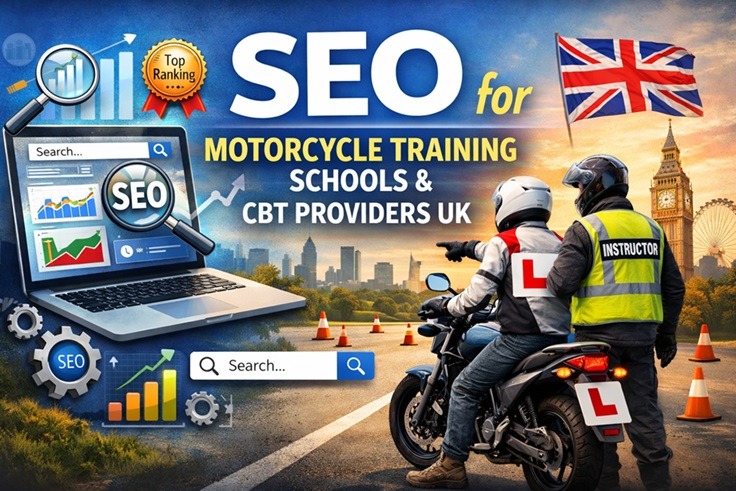
A Practical Guide for 2026
If you run a motorcycle training school in the UK, you're sitting on a goldmine of search demand that most of your competitors are completely ignoring from an SEO perspective. Every single person who wants to ride a motorbike in this country has to pass through you first — or someone like you. That's a powerful position to be in. The problem is, most CBT providers have websites that look like they were built in 2014 and haven't been touched since.
I spent years managing SEO for a company that built automotive websites at scale. We handled everything from car supermarkets to specialist dealers. And the one thing I noticed time and again is that the smaller, service-based niches — the ones without a massive marketing budget — are consistently under-optimised. Motorcycle training is absolutely one of those niches. Which means there's real opportunity here if you're willing to put the work in.
The Funnel Is Different — And That Changes Everything
The first thing to understand is that this isn't a product sale. You're not shifting a Honda CB500 or a set of Alpinestars gloves. You're selling a service that sits right at the start of someone's riding journey, often at a moment of genuine excitement mixed with nerves. That emotional context matters for how you write your content and what questions you need to answer.
A new rider's search journey looks something like this: they hear about motorcycles from a mate, or they're tired of sitting in traffic, or fuel costs are killing them. They start Googling things like 'how do I get a motorbike licence UK' or 'what is CBT?' That's the very top of your funnel — pure awareness, zero purchase intent, but massive volume. Then as they understand the process, searches become more specific: 'CBT course near me,' 'CBT training [city],' 'cheapest CBT Manchester.' And finally: 'book CBT test [location]' or '[school name] reviews.'
Each of these stages needs different content. Too many training schools only optimise for the bottom of that funnel — the people who already know what they want — and completely ignore the top, where you can genuinely capture someone before your competitors even appear on their radar.
Local SEO Is Non-Negotiable
Let me be blunt: if your Google Business Profile isn't fully built out, nothing else matters. Local intent dominates in this niche. People are not going to drive ninety minutes for a CBT course. They want something within a reasonable distance, and Google knows it. The local pack — those three listings that appear at the top with a map — is where the clicks go.
Your GBP needs everything: accurate address and opening hours (including whether you operate at weekends, because many students are working adults), photos of your training ground and bikes, a proper business description that includes your key services and licence categories, and your phone number formatted consistently with your website. That last bit sounds trivial but it matters for citation consistency across the web.
Reviews are your single biggest local ranking lever after proximity. In 2026, with AI Overviews pulling structured information from your GBP directly into search results, review velocity and sentiment matter more than they ever did. Build a simple process for asking students to leave a Google review right after they pass. A text message with a direct link, sent within a few hours of their session ending, converts much better than a card handed over on the day. Don't be shy about it. Most people are happy to leave a review if they've had a good experience — they just don't think to do it unless you ask.
The Keyword Landscape: More Depth Than You'd Expect
The obvious keywords are obvious for a reason — 'CBT course [city],' 'motorbike lessons near me,' 'motorcycle training school [county].' These are where the direct commercial intent lives, and you absolutely need to rank for them. But the real content opportunity in this niche is the licence category complexity.
The UK motorcycle licensing system is genuinely confusing. AM licence. A1. A2. Full A. Direct Access. Mopeds. Progressive access. Age requirements that vary by category. Power-to-weight restrictions. CBT validity periods. What happens when your CBT expires and you haven't taken your test. Whether you need another CBT if you've let it lapse. These questions generate thousands of searches every month, and most of the content that tries to answer them is either out of date, written by people who don't really understand it, or buried in a DVSA PDF that nobody reads.
If you write genuinely clear, accurate, well-structured content about these topics, you will rank. Not because of any clever SEO trick, but because the existing competition is weak and the user intent is extremely clear. A page titled 'A2 Licence: What It Is, What You Can Ride, and How to Get It' with a well-written 900-word explanation will outperform a dealership blog post that briefly mentions A2 as an aside.
Think about the questions people actually ask:
– Can I ride a 125 on a car licence?
– How long does a CBT last?
– What's the difference between A1 and A2?
– Do I need a CBT if I already have a full car licence?
– What happens if my CBT expires before I take my test?
– Can I do Direct Access at 24?
Each of those is a standalone content opportunity. FAQ pages work well here, but individual well-developed pages or blog posts work even better because they give you more room to demonstrate genuine expertise — which is increasingly what both Google and AI systems are looking for.
AI Search Is Already Changing How Students Find You
I want to spend a moment on this because it's not theoretical anymore. In 2026, a significant chunk of initial research journeys start in ChatGPT, Perplexity, or Google's AI Overviews rather than a traditional search listing. Someone types 'how do I get a motorcycle licence in the UK' into an AI and gets a structured answer back. The question is: where does that AI get its information, and is your school mentioned anywhere in the ecosystem it pulls from?
AI systems favour structured, clearly authored, genuinely accurate content. They pull from pages that directly answer questions, that use clear headings, that demonstrate expertise through specificity. A page that says 'CBT stands for Compulsory Basic Training and must be completed before you can ride on public roads' is more citable than a page that's vague about what CBT involves.
This means your content strategy and your AI visibility strategy are effectively the same thing. Write content that directly answers real questions. Use FAQ schema markup so search engines can parse your Q&A pairs cleanly. Make sure you have an About page that establishes who your instructors are, what qualifications they hold (DVSA-registered, ADI equivalent, etc.), and how long you've been operating. Expertise signals matter a great deal in this environment, particularly for content that has real-world consequences — getting your licence category wrong could be both expensive and illegal.
Technical Foundations You Can't Skip
I'm not going to go deep on technical SEO here because it's the same fundamentals that apply across any local service business. But there are a few things worth calling out specifically for training schools.
Mobile performance is critical. Someone Googling 'CBT near me' while standing at a bus stop is not going to wait four seconds for your page to load. Run a Core Web Vitals check — Google's PageSpeed Insights is free. If your LCP (Largest Contentful Paint) is over 2.5 seconds, fix that before anything else.
If you operate across multiple locations — even if it's just two or three training grounds — give each one its own dedicated landing page. Not the same page with the postcode changed. Genuinely distinct pages with local content: nearby landmarks, which test centres you're close to, what the roads are like in that area for training, local testimonials if you have them. Thin duplicate location pages are actively unhelpful.
Booking functionality matters more than most training schools realise. If a student has to call you to book, you're losing conversions. Online booking with real-time availability doesn't just help your conversion rate — if implemented with the right schema, it can also contribute to your local listing's features. At minimum, make your phone number click-to-call on mobile, and have a contact form that works.
Building Authority in a Niche Community
Backlinks remain a ranking factor, and in a niche like this, they're more achievable than most people think — because the competition isn't doing much to earn them.
Think about who links to motorcycle training content naturally. Motorcycle dealerships in your area, particularly ones that sell learner-friendly bikes, have an obvious reason to point new riders toward a CBT provider. Local newspapers and community sites sometimes do roundups of local businesses or driving schools. The IAM RoadSmart or other road safety organisations sometimes link to training providers. Rider training is a natural fit for any content about road safety initiatives.
You don't need fifty links. In a local niche, five or ten high-quality, genuinely relevant links from sites that have their own authority can make a meaningful difference to your rankings. Focus on relationships rather than link schemes. Sponsor a local riding club's event. Offer a guest post to a local blog about how to prepare for CBT. These things compound over time.
Seasonal Search Patterns — And How to Use Them
Motorcycle training follows the riding season, but with a slight lead. Search volume for CBT courses starts climbing in January and February, peaks around March and April, and stays high through summer. It drops noticeably from October onwards, though it never disappears entirely — some people train in winter, particularly commuters.
This has content implications. You want your buying-intent pages at peak optimisation heading into spring, which means January is when you should be updating, refreshing, and potentially building new pages — not when the enquiries are already flooding in. Seasonal content like 'How to Prepare for Your CBT in Spring 2026' or 'What to Wear for Motorcycle Training in Cold Weather' can capture early-funnel search traffic at moments when purchase intent is building.
Measuring What Actually Matters
For a training school, the metrics that matter are calls, form submissions, and bookings — not just traffic. Set up conversion tracking properly in Google Analytics 4 before you do anything else. If you can't see which pages are generating enquiries, you're flying blind.
Track your local pack rankings for your core keywords using a tool like BrightLocal or even a free alternative. Watch your GBP insights to see how many people are clicking to call or requesting directions. These are warm signals — people don't ask for directions unless they're considering coming.
And keep an eye on your review profile. Not just the total, but recent review velocity. Google's local algorithm weights recent reviews heavily. Ten reviews from three years ago matters less than three reviews from this month.
The Opportunity Is Real — But Only If You Move
Here's the thing I'd tell any motorcycle training school owner directly: most of your local competitors have done almost nothing on SEO. Their websites are slow, their GBP is half-built, and their content is thin. That's not me being harsh — it's what the data shows across almost every local market I've looked at in this niche.
That means you don't need to be perfect. You need to be better than the school down the road, and in 2026 that bar is, frankly, not that high. A fast mobile site, a fully optimised GBP, honest and helpful content that answers the questions new riders actually have, a consistent approach to collecting reviews, and a handful of decent backlinks will put you ahead of the vast majority of your competitors in most UK towns and cities.
The riders are already searching. They're looking for someone to trust with something that genuinely matters to them — their safety, their licence, their freedom to ride. Make sure it's you they find.
If you want help implementing this, my SEO services for UK businesses can handle the strategy and execution for you, or, If you’d like a clear breakdown of what working together looks like, see my SEO services & pricing scheme.
About me:
I'm the founder of JJSEO and a senior SEO consultant based in Leeds, with over 20 years of experience delivering results in the UK and Spanish markets. Originally from Argentina and holding degrees in both Computer Science and Insurance & Finance, I bring an analytical, data-driven approach that goes well beyond standard metrics. I work with SMEs, agencies, and niche businesses — including automotive and specialist vehicle sectors — using tailored strategies that combine technical depth with real-world commercial thinking. Work with Jorge →
Related blog posts:
How Schema Makes Your Car Dealership Visible in Google’s AI Results
How Independent Car Dealers Can Actually Win More Customers With Voice Search in 2025
The Complete SEO Guide for Campervan & Caravan Dealers
SEO for Insurance Brokers UK: Guide from Leeds Consultant
Used Car SEO UK: Prestige vs Specialist Dealers Explained
How to Fix Duplicate Content on Your Campervan Dealer Stock Listings
SEO Strategies for Independent Car Dealers in Leeds and Beyond
Expertise
Driving organic traffic and qualified leads with tailored SEO solutions.
Growth
Results
Mail to: jj@jjseo.co.uk
© 2025 JJSEO. All rights reserved. | Expert SEO Consultant in Leeds
Free SEO Toolsour text here...