
Estate Agent SEO Strategy 2026: The New Rules for UK & Spain
2026 brings AI search and market stability. Learn the specific SEO strategies UK independents and Spanish specialists need to dominate the new landscape.
SMESESTATE AGENT SEOMULTILINGUAL SEO
Jorge Jaroslavsky
12/15/202512 min read
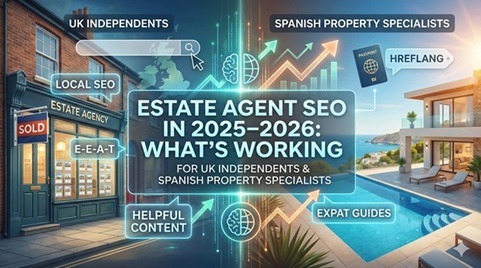
What's Working for UK Independents (and Spanish Property Specialists)
As someone who works in SEO with estate agencies across the UK and Spain, I've watched 2025 bring significant changes to how property search works. The market itself has stabilised somewhat, with forecasts pointing to modest house price growth of around 2–4% in 2026. But the real transformation has been in search behaviour and what Google rewards.
Google's 2025 core updates have fundamentally shifted the landscape. The changes centre around E-E-A-T (Experience, Expertise, Authoritativeness, Trustworthiness) and what Google calls "Helpful Content." Simply put, thin content and obviously auto-generated pages struggle to rank now, regardless of whether they're written by humans or AI. Meanwhile, agencies demonstrating genuine expertise and local knowledge are seeing their organic visibility improve substantially.
Let me share what's actually working right now, both for domestic UK agencies and those specialising in the Spanish expat market.
The Current Landscape for Independent Estate Agents
Independent estate agencies face stiff competition from Rightmove and Zoopla, which capture the majority of listing-led traffic. These portals are effective but expensive, and they commoditise estate agents—buyers often treat all agents on the platform as interchangeable.
This is precisely why SEO matters more than ever. Organic search drives direct enquiries from people who've actively researched and chosen to contact a specific agency. These leads tend to convert better because there's already an element of trust established through content and expertise demonstrated online.
For independents, SEO is particularly powerful because it rewards exactly what smaller agencies do well: deep local knowledge, personal service, and genuine expertise. You're not competing on scale—you're competing on authority and trustworthiness.
Understanding E-E-A-T in Practice
E-E-A-T sounds like jargon, but it translates into practical, tangible actions. Google's algorithm now evaluates whether content demonstrates real-world experience and expertise.
For estate agencies, this means:
Showcasing real people and credentials. Agent bios that highlight qualifications (NAEA/Propertymark membership), years of experience, and specific local area knowledge perform better than generic "meet the team" pages. Video introductions add another layer of authenticity—people can see and hear the actual agents they'll work with.
Demonstrating genuine expertise. Content needs to reflect real market insight, not just regurgitated information available everywhere. Market commentary based on local data, analysis of specific neighbourhoods, understanding of local planning developments—this is the expertise Google's looking for.
Building trust signals. Client testimonials (with permission), transparent fee structures, clear explanations of processes, and high-quality reviews all contribute to trustworthiness. These aren't just conversion optimisation tactics—they influence rankings too.
The key distinction Google's making now is between helpful, expert-driven content and content created purely to rank. The algorithm has become remarkably sophisticated at spotting the difference.
AI Overviews and Zero-Click Search
AI Overviews—those AI-generated summaries appearing at the top of many search results—have changed user behaviour significantly. Many searches now get answered directly in the results page without anyone clicking through to a website.
Initially, this seems like a problem. But there's an opportunity: if your content appears in these overviews, you're positioned as the authority on that topic. Users who do click through are highly qualified, and your brand gets visibility even when they don't.
Optimising for this means structuring content clearly with concise answers, using FAQ formats, implementing schema markup for structured data, and creating content that directly answers common questions. Tables, bullet points, and well-organised information increase the likelihood of appearing in featured snippets and AI-generated summaries.
Local SEO: Where Independents Win
Local SEO has become crucial for estate agencies. Searches like "estate agents near me" and postcode-specific queries generate tens of thousands of monthly searches across the UK.
Google Business Profile is the foundation of local visibility. An optimised profile needs:
Accurate and consistent NAP (name, address, phone) data across all platforms
High-quality photos of the office, team, and local area
Regular posts about new listings, market updates, and local news
Systematic review generation and prompt responses to all reviews
The local three-pack (those three businesses shown with map pins at the top of local search results) drives enormous traffic. Getting into that space requires GBP optimisation, strong reviews, and relevant, localised content on your website.
Reviews deserve particular attention. An average rating of 4.5 stars or higher significantly impacts both rankings and conversion rates. Having a system for requesting reviews after successful completions—via follow-up emails with direct links to Google and Trustpilot—makes this manageable rather than sporadic.
Hyper-local keyword targeting is where independent agencies have a genuine advantage over nationals. Instead of competing for broad terms like "estate agents UK," focus on:
"Estate agents in [specific neighbourhood/postcode]"
"Properties for sale in [area]"
"Flats to rent in [specific location]"
Long-tail phrases like "best estate agent for first-time buyers in [area]"
Question-based queries like "how much does conveyancing cost in [region]"
Tools like Google Keyword Planner, Ahrefs, or Semrush help identify these opportunities. Often there are high-intent, location-specific phrases with decent volume and low competition—exactly where independents can dominate.
Content That Serves the Buyer Journey
Content strategy needs to address the entire UK property journey, not just listing descriptions. The most effective approach creates evergreen resources that demonstrate expertise whilst targeting informational search queries.
Comprehensive area guides go beyond basic statistics. Include genuine insights about different streets and postcodes, where locals actually socialise, transport links, upcoming developments, and honest assessments of neighbourhood characteristics. This type of detailed, experience-driven content is exactly what E-E-A-T rewards.
Market insight and analysis positions agencies as local experts. Regular content around price trends, seasonal patterns, market forecasts for 2026, and analysis of what's driving local changes demonstrates ongoing expertise. Using actual data from your local market makes this credible and valuable.
Practical guides on UK-specific processes target high-intent informational searches:
Stamp duty calculations and exemptions
Leasehold versus freehold explained
First-time buyer schemes and help to buy ISAs
The conveyancing process broken down
Understanding EPC ratings and requirements
These pages rank well because they're genuinely helpful, and they pre-qualify leads. Someone who's read your comprehensive guide to the buying process is an educated prospect who's more likely to convert.
Structuring this content matters. Use FAQs, comparison tables, step-by-step guides, and clear headings. This makes it easier for Google to extract snippets for featured results and AI Overviews. Implementing FAQ schema markup for question-based content significantly improves chances of enhanced search results.
Technical Foundations You Need
The technical side of SEO doesn't need to be overcomplicated, but certain foundations are non-negotiable:
Speed and mobile responsiveness are critical. Core Web Vitals—Google's metrics for page speed, interactivity, and visual stability—directly impact rankings. The majority of property searches now start on smartphones, so mobile performance matters more than desktop.
Large, unoptimised images are a common culprit. Property photos need to look good, but they should be compressed and properly sized for web use. A site taking 5-7 seconds to load on mobile will lose both rankings and potential enquiries.
Schema markup helps Google understand your content. Implement LocalBusiness and RealEstateAgent schema for your main pages, plus structured data for property listings, FAQs, and how-to content. This improves eligibility for rich results in search.
Property listing pages generated from CRM or portal feeds need careful implementation. Thousands of dynamically generated pages can be powerful for SEO if they're crawlable, properly indexed, and genuinely unique. Poor implementation creates duplicate content issues and indexation problems.
Hreflang tags become essential if you're targeting multiple regions or languages (particularly relevant for Spanish property specialists, covered below).
Voice Search and Conversational Queries
Voice search continues growing, particularly via smartphones and smart speakers. This influences query patterns—people speak differently to how they type.
Voice queries tend to be longer and more conversational: "What's the best estate agent in [area] for first-time buyers?" rather than "estate agents [area]."
Optimising for this means:
Creating content that answers natural language questions
Using conversational headings that mirror how people actually speak
Implementing FAQ sections that address common spoken queries
Focusing on long-tail keywords that reflect natural speech patterns
Content Freshness and Multimedia
Regular content updates signal to Google that your site is active and current. This doesn't mean daily blog posts for the sake of it—it means meaningful updates to existing content, new market insights, and fresh multimedia.
High-quality imagery is essential for property websites. Beyond the obvious listing photos, invest in professional photography of your team, office, and local area. Visual content improves engagement metrics, which influence rankings.
Video content has become increasingly important. Video walkthroughs of properties, area tours, agent introductions, and explainer videos about the buying process all perform well. Video appears in search results, improves time-on-site metrics, and builds trust more effectively than text alone.
360° tours and virtual viewings became mainstream during pandemic lockdowns and remain popular. They improve user experience and provide rich content that keeps visitors engaged longer—a positive signal to Google.
SEO for Spanish Property Specialists: A Different Challenge
A significant number of UK-based agencies specialise in Spanish property for British buyers and expats. This is one of the most interesting SEO challenges because it requires balancing two markets, two languages, and multiple search engines.
Spain remains a leading destination for UK property buyers—British purchasers accounted for over 5,700 transactions and around 8% of foreign purchases in the first half of 2025. Demand is strongest in coastal regions: Costa del Sol, Costa Blanca, Alicante province, and parts of Andalusia and Murcia. These areas offer the sunny, coastal lifestyle with established expat communities that British buyers seek.
The Unique Challenges
Multilingual SEO is essential. With Google now consolidating most searches through google.com regardless of location, proper implementation of hreflang tags becomes even more critical to ensure the right language version appears for the right users. You need to rank for both UK-based searchers and people searching in Spanish, with Google's algorithm determining which version to show based on user location, language settings, and hreflang signals rather than the specific Google domain being used.
Portal competition intensifies. Beyond UK portals like Rightmove, you're competing with major Spanish and international platforms—Idealista, Kyero, ThinkSpain. Direct organic visibility becomes even more valuable when portal costs are high and competition is fierce.
Expat-specific search intent differs from typical UK property searches. Prospective buyers aren't just looking for listings—they're researching visa requirements, tax implications, healthcare access, cost of living, and practical relocation details. Content needs to address this broader information need.
Multilingual Keyword Research
Research needs to span two languages and different search intents:
English keywords target UK-based researchers:
"Property for sale in Spain"
"Costa del Sol villas for British buyers"
"Retiring to Spain from UK"
"Best places for British expats in Spain"
"Buying property in Spain as a UK resident"
Spanish keywords capture Spanish-speaking buyers and locals:
"Viviendas en venta en España"
"Inmobiliaria Costa Blanca"
"Pisos en venta Marbella"
"Propiedades en Alicante"
Post-Brexit searches around buying property as a UK resident have increased significantly. There's substantial volume for queries about NIE numbers, residency requirements, and how Brexit affects property purchases.
Tools like Ahrefs and Semrush with language filters help identify high-volume expat queries. Often there are valuable long-tail phrases with decent volume but relatively low competition.
Multilingual Site Structure
Proper implementation is crucial to avoid duplicate content issues and ensure Google serves the right language to the right users.
Hreflang tags tell Google which language version to show to which users (en-GB for UK English, es-ES for Spanish). These need to be implemented correctly in the site's header or sitemap.
URL structure typically uses subfolders for different languages: agency.co.uk/es/ for Spanish content keeps everything under one domain whilst clearly separating languages. Subdomain structures (es.agency.co.uk) work too, but subfolders tend to be simpler to manage.
Translation quality matters enormously. Machine translation creates awkward content that doesn't rank well and doesn't convert. Professional translation by someone who understands property terminology in both markets is essential. Spanish content needs to use terminology actual Spanish buyers use, not literal translations of English phrases.
Expat-Focused Content Strategy
Content needs to address the complete relocation and purchase journey, not just property listings.
Practical guides on cross-border buying:
NIE numbers: what they are, how to get them, timelines
Residency and visa options post-Brexit (non-lucrative visas and available routes)
Spanish property taxes (ITP, IVA, annual property tax)
Impact of Brexit on property purchases and ownership
Legal processes and requirements for UK buyers
Currency exchange and international money transfers
Lifestyle and relocation content:
"Best areas for British expats in Spain 2026"
Cost of living comparisons between UK cities and Spanish regions
Healthcare access for British residents in Spain
Schools and education for English-speaking children
Expat community guides for different regions
Climate, culture, and lifestyle factors
Regional deep-dives: Detailed guides to specific areas popular with British buyers—Costa del Sol, Costa Blanca, Alicante province, specific towns like Marbella, Nerja, Javea. Include property price comparisons, amenities, expat community size, accessibility to UK (airports and flight times).
Case studies and testimonials from British buyers who've successfully purchased through the agency. Real stories about the process, challenges overcome, and life after moving build credibility and trust.
Video Content for Spanish Property
Video works particularly well for the Spanish property market because many potential buyers can't easily visit in person during their research phase.
Virtual property tours and area walkthroughs
Interviews with British expats living in different Spanish regions
Step-by-step explanations of the buying process for UK buyers
Comparison videos showing different areas and property types
"Day in the life" content showing what living in specific areas is actually like
This content serves multiple purposes: it ranks for informational video searches, it appears in Google's video results, and it builds trust with buyers who are making a major international purchase decision.
Local SEO for Spanish Locations
If you have physical offices in Spain, optimise separate Google Business Profiles for each location. Target phrases like:
"English-speaking estate agents in Marbella"
"British estate agents Costa del Sol"
"Inmobiliaria para británicos en Alicante"
Geo-targeted schema markup for specific Spanish locations helps Google understand where you operate and improves visibility for location-specific searches.
Building E-E-A-T for International Property
Demonstrating expertise in cross-border transactions requires additional trust signals:
Partnerships with Spanish lawyers, gestors, or financial advisors
Membership in relevant organisations (Association of International Property Professionals where applicable)
Clear explanation of your end-to-end service and how you support buyers through the Spanish process
Transparent information about fees, timelines, and what's included
Evidence of UK regulatory compliance (NAEA membership, client money protection)
British buyers making international purchases want reassurance that they're working with reputable, knowledgeable professionals. Combining UK trust signals with demonstrated Spanish market expertise creates this confidence.
Link Building for Spanish Property Agencies
Backlinks remain important for authority and rankings. For Spanish property specialists, target:
UK expat forums and communities discussing Spanish relocation
Overseas property sections on major UK property portals
Spanish business directories and property platforms
Media covering expat life, retirement abroad, and international property
Local Spanish news sites and English-language publications in Spain
Guest articles on reputable expat and property websites, participation in relevant forums, and getting featured in overseas property guides all build valuable links.
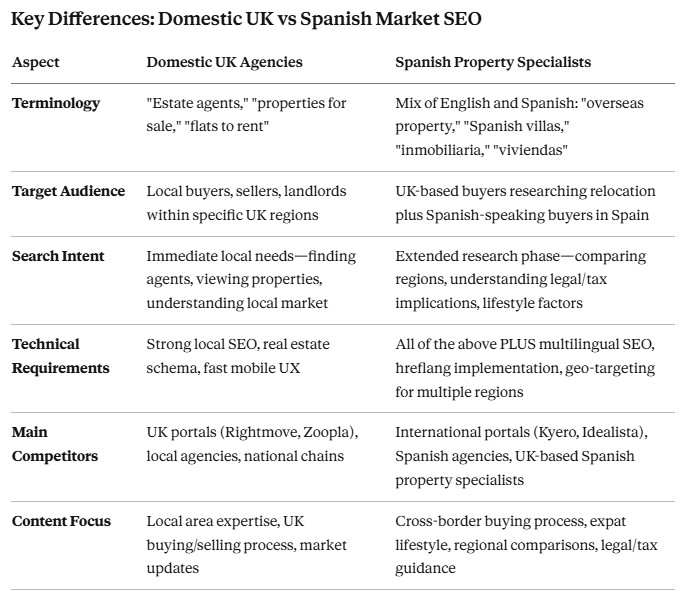
Key Differences: Domestic UK vs Spanish Market SEO
Practical Steps for Implementation
Whether you're a domestic UK agency or Spanish property specialist, certain priorities apply:
Audit your current position. Use Google Search Console to understand what you currently rank for, which pages get traffic, and where opportunities exist. Identify quick wins—pages ranking positions 6-15 that could reach the first page with optimisation.
Fix technical foundations first. Site speed, mobile responsiveness, schema markup, and proper indexation need to be sorted before investing heavily in content. A technically weak site won't rank well regardless of content quality.
Invest in Google Business Profile. For local SEO, this is often more important than your website. Weekly posts, systematic review generation, professional photography, and prompt review responses should be routine.
Create substantial, helpful content. One excellent, comprehensive guide is worth more than ten thin blog posts. Focus on topics where you have genuine expertise and where you can provide value beyond what's already ranking.
Build a systematic review generation process. Follow-up emails after completions, direct links to Google and Trustpilot, responses to all reviews (positive and negative). Aim for 4.5+ star average with consistent new reviews.
Track meaningful metrics. Organic enquiries, rankings for high-intent keywords, local pack impressions, and time on site matter more than vanity metrics like total traffic. Use Google Analytics and Search Console to monitor progress monthly.
For Spanish property agencies specifically:
Implement hreflang properly from the start—fixing it later is more difficult. Invest in professional translation, not machine translation. Create expat-focused content addressing the complete relocation journey. Build separate content strategies for English and Spanish audiences. Optimise for both Google.co.uk and Google.es with appropriate geo-targeting.
Timeline and Expectations
SEO is not a quick win. Meaningful results typically take 6-12 months, though some improvements (like local pack visibility from GBP optimisation) can happen faster.
The advantage of SEO over paid advertising is that you're building an asset. The visibility you create compounds over time. Rankings and authority built through good SEO continue working without ongoing spend, unlike ads which stop the moment you stop paying.
For independent agencies, this matters particularly. Budget that would go to ever-increasing portal fees or Google Ads can be redirected into building organic visibility—a more sustainable, long-term approach.
Why Independents Can Win at SEO
National chains have bigger budgets and more resources, but independent agencies have advantages that matter more for SEO:
Genuine local expertise. You know your area intimately—the good streets, upcoming developments, local quirks, and market nuances. This knowledge, properly articulated in content, is exactly what Google's algorithm now rewards.
Personal service and trust. E-E-A-T favours businesses that demonstrate real people with real expertise. Independents naturally do this better than corporate chains with interchangeable agents.
Niche focus. Whether it's specialising in period properties, first-time buyers, Spanish coastal properties, or specific UK postcodes, niching down helps you dominate particular search queries rather than competing broadly.
Agility. You can implement changes, publish content, and respond to market shifts faster than large organisations with bureaucratic processes.
The agencies succeeding with SEO in 2025 aren't those with the biggest budgets—they're those demonstrating genuine expertise, building real local authority, and creating content that actually helps people make informed decisions.
Final Thoughts
The property search landscape has fundamentally changed. Google's algorithm has become sophisticated enough to recognise genuine quality and expertise. AI Overviews and zero-click search have shifted user behaviour. Local search has become more important than ever.
For independent estate agencies, these changes create opportunity. You can't outspend Rightmove or the national chains, but you can out-expert them in your local market. You can build trust through helpful content and demonstrated knowledge. You can capture direct enquiries from buyers and sellers who've actively chosen you based on expertise rather than portal placement.
For Spanish property specialists, the challenge is greater but so is the opportunity. Properly implemented multilingual SEO targeting both UK and Spanish markets, combined with comprehensive expat-focused content, can drive qualified enquiries from buyers making major international purchase decisions.
The agencies thriving in 2026 will be those that embraced SEO not as optional marketing but as essential infrastructure—building organic visibility that reduces portal dependence and creates more resilient, profitable businesses.
The question isn't whether SEO works for estate agencies in 2025. It demonstrably does. The question is whether you'll invest the time and resources to make it work for you.
Contact me if you like to gain more visibility and increase your leads.
Expertise
Driving organic traffic and qualified leads with tailored SEO solutions.
Growth
Results
Mail to: jj@jjseo.co.uk
© 2025 JJSEO. All rights reserved. | Expert SEO Consultant in Leeds
Free SEO Toolsour text here...